

Your shoulder is an incredible, complex joint designed for wide-ranging freedom of movement. When you feel a persistent ache deep inside, especially when reaching or lifting, it can stop you completely.
This painful restriction often points to Rotator Cuff Tendinopathy. It affects everything from throwing a ball to reaching into a cupboard.
Sports therapy offers practical, effective treatment to address the discomfort. We focus on restoring strength and balance so your shoulder can move powerfully and without hesitation again.
The rotator cuff is a group of four small muscles and their tendons surrounding the shoulder joint. These muscles work together to stabilise the arm bone in the socket. They are crucial for both rotating the arm and lifting it overhead safely.
Tendinopathy occurs when these tendons become irritated, sensitive, or disorganised due to repeated strain. This reduces their ability to handle the required load efficiently. It is generally a sign of overuse or under-preparedness.
The main symptom is pain that feels sharp during certain movements, like reaching behind your back. It might also cause a dull ache when resting or lying on the affected side at night. Understanding these patterns guides the rehabilitation plan.
Shoulder tendinopathy is very common in sports and jobs that involve repetitive overhead and lifting movements. Swimmers, tennis players, equestriennes, painters, and carpenters often experience this issue. This consistent strain on the tendons causes microtrauma over time.
The problem is amplified if the supporting muscles fatigue or lack proper coordination and the small rotator cuff tendons end up taking on too much of the work. This constant high load, without enough recovery, leads to irritation and pain.
Even poor form during strength training, like pushing too much weight too fast, can trigger the symptoms. The tendon capacity is simply exceeded by the demand being placed upon it.
Shoulder health relies on a strong, balanced foundation. If the large muscles of the back and chest are stronger than the small rotator cuff muscles, it creates an imbalance. This mechanical imbalance pulls the joint out of optimal alignment.
Poor posture, especially sitting slumped over a desk for long hours, also plays a major role. This rounded shoulder position restricts the space available for the rotator cuff tendons. It makes those overhead movements more likely to cause painful pinching.
Sports therapy assesses the strength and endurance of the entire shoulder girdle. We strengthen the muscles that pull the shoulder blades back and down. This improves the shoulder’s alignment and creates more space for the tendons to glide freely.
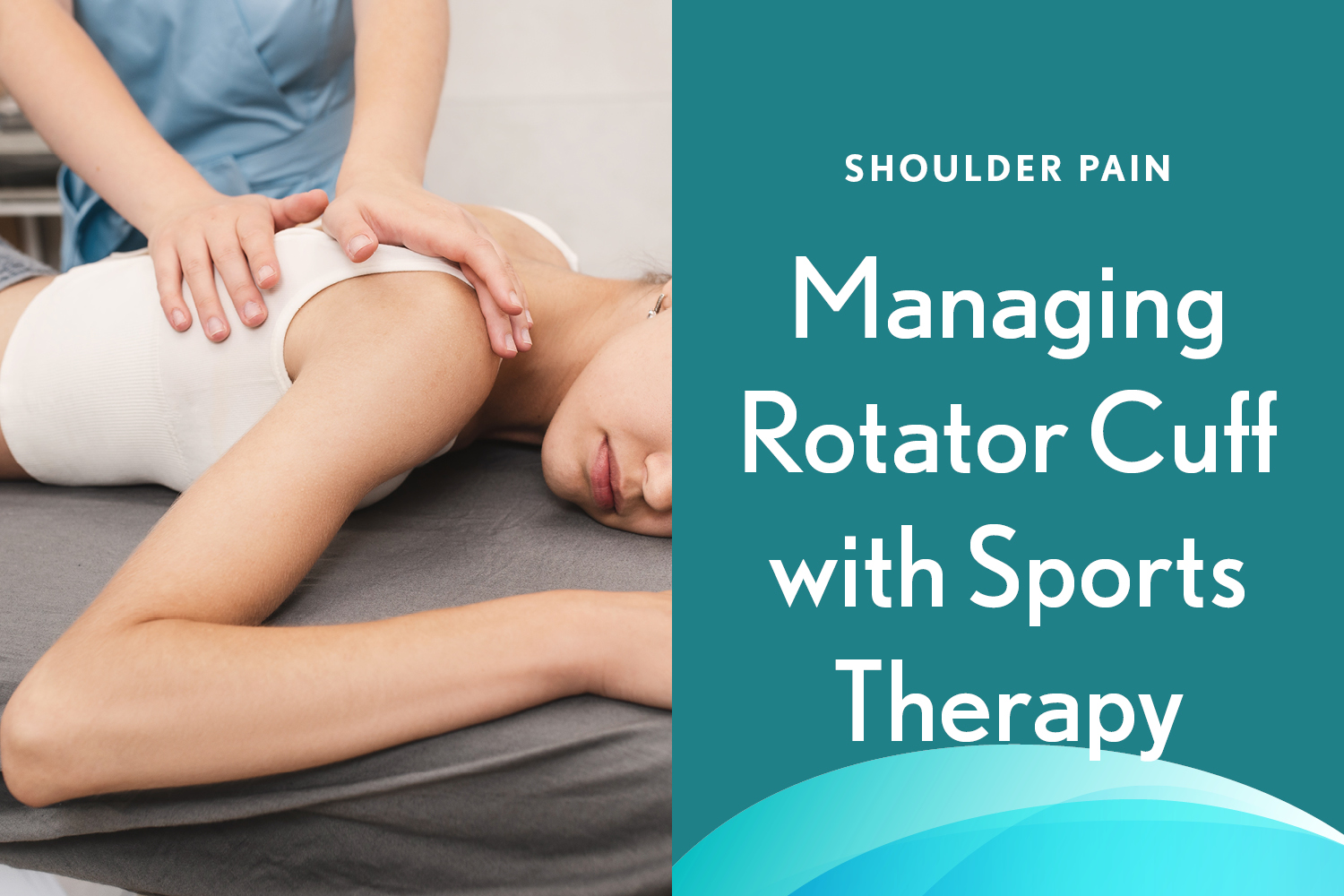
Sports therapy provides a dual approach, using hands-on care alongside targeted strength work. Manual techniques help to immediately reduce tension in the muscles surrounding the joint. This can include soft tissue massage on the upper back and shoulder.
Your therapist may also use gentle joint mobilisation techniques. These methods encourage better movement in the shoulder blade and the main shoulder joint. Improved mobility here reduces impingement and strain on the tendons.
Crucially, recovery centres on structured, progressive exercise. The goal is to safely load the rotator cuff tendons to encourage healing and build robust strength. This is how we rebuild the tendon’s confidence to handle heavy activity.
We combine these advanced treatments with Tailored Rehab programmes and advise on beneficial Supplements.
For persistent or long-standing cases of shoulder pain related to the rotator cuff tendons, Extracorporeal Shockwave Therapy (ESWT) provides an excellent non-invasive treatment option.
The complex anatomy of the shoulder often means poor blood supply to the area of damage, stalling the natural repair process. ESWT specifically targets the affected tendon (often the supraspinatus) with high-intensity acoustic pulses.
This mechanical energy initiates a potent anti-inflammatory and regenerative response.
Critically, the shockwaves help to break down pathological calcifications (calcium deposits) that frequently occur in chronic rotator cuff issues, while simultaneously promoting the development of new blood vessels.
This helps the damaged tissue get the necessary nutrients to properly heal and regain its functional capacity.
Returning to full activity requires a structured, intelligent plan, not just wishing the pain away. We help athletes gradually reintroduce throwing or swimming movements. This phased approach ensures the tendon adapts safely to high forces.
We provide specific rotator cuff strengthening exercises. These are often low-weight, high-repetition movements designed to build tendon endurance and stability. They protect the shoulder from future strain.
For active individuals, we offer advice on modifying daily movements. Simple changes, like improving your seated posture or altering the way you lift objects, can reduce chronic irritation and support long-term recovery.
Rotator Cuff Tendinopathy can make your shoulder feel fragile, leading to hesitant movement. But your shoulder is designed to be strong, resilient, and dynamic. It just needs the right support to regain that confidence.
Sports therapy provides the expertise to address the imbalance, ease the tension, and guide the strengthening process. It is about returning to a place where lifting, throwing, and reaching feel natural and pain-free. If shoulder pain is limiting your life, let’s work together to restore your full range of motion.
