

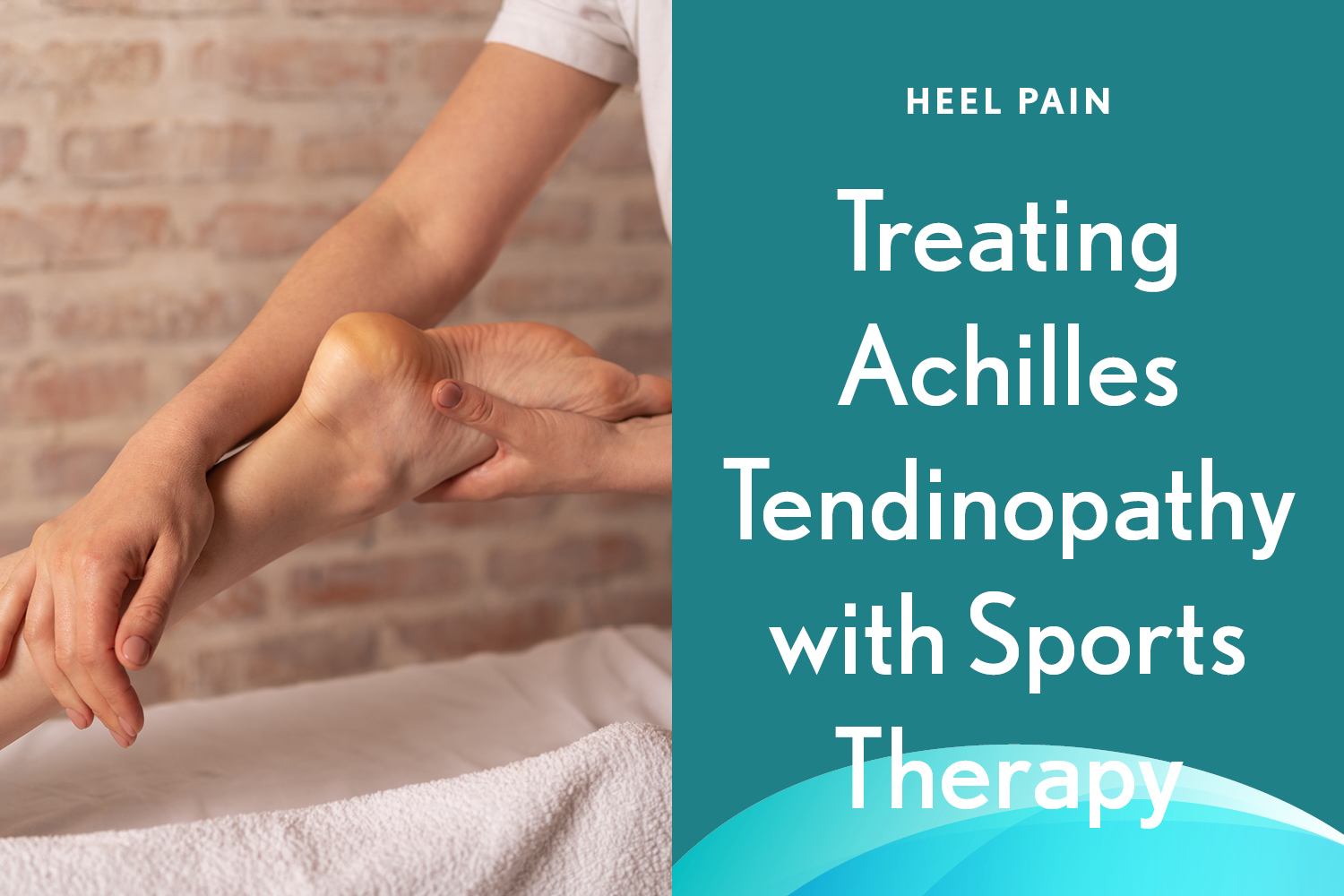
The Achilles tendon is the body’s largest and strongest tendon. When it becomes painful, like developing a deep, nagging ache just above the heel, it can stop all forward momentum in life and sport.
This niggling heel pain is usually a sign that you have Achilles Tendinopathy, a frustrating condition that makes it hard to push off the ground.
Sports therapy offers clear, actionable support to address the pain of Achilles Tendinopathy. We focus on rebuilding the tendon’s resilience so you can return to running, jumping, and walking with confidence.
The Achilles tendon connects your powerful calf muscles (the gastrocnemius and soleus) to your heel bone. It acts as a spring, storing and releasing massive amounts of energy during activity. This is essential for activities like walking and jumping.
Tendinopathy occurs when the tendon is repeatedly overloaded without sufficient time to recover. The tissue structure becomes sensitive and disorganised. This reduces its ability to handle force efficiently.
The pain is usually felt just above the heel, or sometimes in the middle of the tendon. You might notice stiffness first thing in the morning or pain during the initial stages of exercise. Understanding this pain pattern guides the treatment process.
Achilles Tendinopathy is primarily a capacity issue. It means the load you are putting through the tendon exceeds its current ability to cope. This is why repetitive loading is a major factor.
A common trigger is a sudden increase in your training. Perhaps you suddenly increase your running mileage or the intensity of hill training. Changing footwear or switching to running on harder surfaces can also place extra strain on the tendon.
Ignoring minor tightness and trying to push through the pain also contributes to the problem. The tendon needs time and the right type of stimulus to adapt. Therapy helps manage that loading carefully.
The Achilles tendon works directly with your calf muscles. Therefore, the strength of your calves is vital for tendon health. Weak or fatigued calf muscles mean the Achilles tendon has to absorb a disproportionate amount of force.
A key part of recovery involves building the strength and endurance of those calf muscles. When they are strong, they share the load more effectively. This protects the tendon from excessive strain during movement.
We also look at flexibility, specifically the range of motion in the ankle. Restricted ankle movement can force the Achilles to stretch too far, too soon, during activity. Addressing this restriction helps the tendon move more safely.
Sports therapy provides hands-on care combined with specific exercise to support healing. Resting completely often makes the tendon weaker in the long run. The tendon needs a controlled load to reorganise and strengthen its structure.
Heavy, slow resistance training is central to effective rehabilitation. Manual techniques, such as Sports Massage (including Deep Tissue) and friction, are used on the calf and surrounding areas. This helps reduce excessive muscular tension that pulls on the Achilles tendon.
To stimulate repair, we utilise Shockwave Therapy to promote tissue regeneration. Acupuncture can be very effective for pain management and localised relief. Cupping may be used on the calf to aid recovery.
We combine these treatments with a comprehensive Tailored Rehab plan and recommend relevant Supplements to support tendon health.
Extracorporeal Shockwave Therapy (ESWT) provides a focused, high-energy mechanical stimulus directly to the site of the tendon pathology.
This non-invasive treatment is highly effective for persistent cases of Achilles Tendinopathy because it immediately disrupts the pain-signalling nerves while simultaneously initiating a significant regenerative cascade.
The shockwaves encourage the neovascularisation (formation of new blood vessels) within the often poorly-vascularized tendon tissue and actively remodel the disorganised, collagen structure that defines chronic tendinopathy. This focused stimulation helps the tendon become stronger, thicker, and more resilient to load over time.
Returning to high-impact activities requires a careful, phased strategy. Your therapist will guide you through a deliberate progression back to full sport. We ensure the tendon is ready for the forces involved in running and jumping.
Early on, you focus on strengthening movements that have minimal impact on the tendon. As your pain improves, you gradually introduce low-level jumping drills. This teaches the tendon to store and release energy safely again.
We help you manage training volume and intensity carefully. Learning to listen for the tendon’s subtle feedback signals prevents setbacks. This phased approach restores not just function, but also confidence in your movements.
Achilles Tendinopathy does not have to be a recurring issue. True recovery means establishing habits that protect your tendon for years to come. This involves consistent strength work and smart training choices.
Sports therapy equips you with the knowledge and tools to manage your own training load. Maintaining strong calf muscles is your best preventative medicine. This commitment allows you to enjoy running, sports, and life without heel pain holding you back.
