

For centuries, periods have been shrouded in silence, shame, and misinformation. Many of us are taught from a young age to endure them quietly. We’re told that pain, discomfort, and wild mood swings are just part of the deal.
But your menstrual cycle is much more than a monthly inconvenience. It is a vital sign of your health, just like your blood pressure or your heart rate. It provides a detailed monthly report on your hormonal balance. It’s time we learned how to read that report and understood what it’s really telling us.
One of the biggest sources of anxiety around periods is the idea that there is a single, perfect “normal.” We’re often told a normal cycle is exactly 28 days long. But this is a myth. In reality, there is a wide and healthy spectrum.
A healthy cycle for an adult can range from 21 to 35 days. The length of your period can also vary, typically lasting between 2 and 7 days. What’s most important is consistency for you. A cycle that is regular and predictable is a strong indicator of hormonal balance.
It’s about understanding your own unique rhythm. If your cycle has always been 32 days long and your period lasts for 6 days, that is your normal. The red flag isn’t that you don’t fit the 28-day textbook model. The red flag is a sudden and unexplained change in your established pattern.
Your hormones are not static. They are in a constant, dynamic dance throughout your monthly cycle. They also shift dramatically through the major stages of life. Understanding these transitions can help you navigate them with more grace and self-compassion.
Puberty is the beginning of this journey. It’s when your body is first learning this new hormonal rhythm, so cycles are often irregular. In your reproductive years, the goal is a consistent pattern. Pregnancy brings a massive hormonal shift, followed by another in the postpartum period.
Finally, perimenopause and menopause mark the end of your reproductive years. This transition can last for several years and is often characterised by fluctuating hormones and irregular cycles.
Knowing what to expect at each stage can help you differentiate between a normal transition and a sign that something is out of balance.
The silence surrounding periods has done a great disservice to our health. Open and honest conversation is the first step to better care and understanding. Talking to friends, family, or a trusted practitioner helps to break down the stigma. It normalises the experience and helps us realise we are not alone.
Using clear, direct, and anatomically correct language is empowering. It allows us to describe our symptoms accurately. This is crucial when seeking medical support. Instead of saying “I have bad cramps,” try describing the type of pain, its location, and its intensity on a scale of 1 to 10.
This clarity helps healthcare providers to understand the full picture. It also helps us to advocate for ourselves. When we can speak about our bodies with confidence, we are more likely to be taken seriously and receive the care we need.
While some mild discomfort can be a part of a normal cycle, severe pain is not. Debilitating cramps that cause you to miss work or school are a significant red flag.
Very heavy bleeding (soaking through a pad or tampon every hour) or periods that last longer than 7 days are also signs that your body needs support.
Extreme mood swings, often dismissed as “just PMS,” can also be an indicator of an underlying hormonal imbalance. If you feel like a completely different person in the week before your period, that’s worth investigating.
These symptoms are not something you just have to “put up with.” They can be signs of conditions like endometriosis, fibroids, or Polycystic Ovary Syndrome (PCOS). They are valid reasons to seek answers and compassionate care.
Your menstrual cycle is a powerful feedback system. Tracking it is one of the most insightful things you can do for your health.
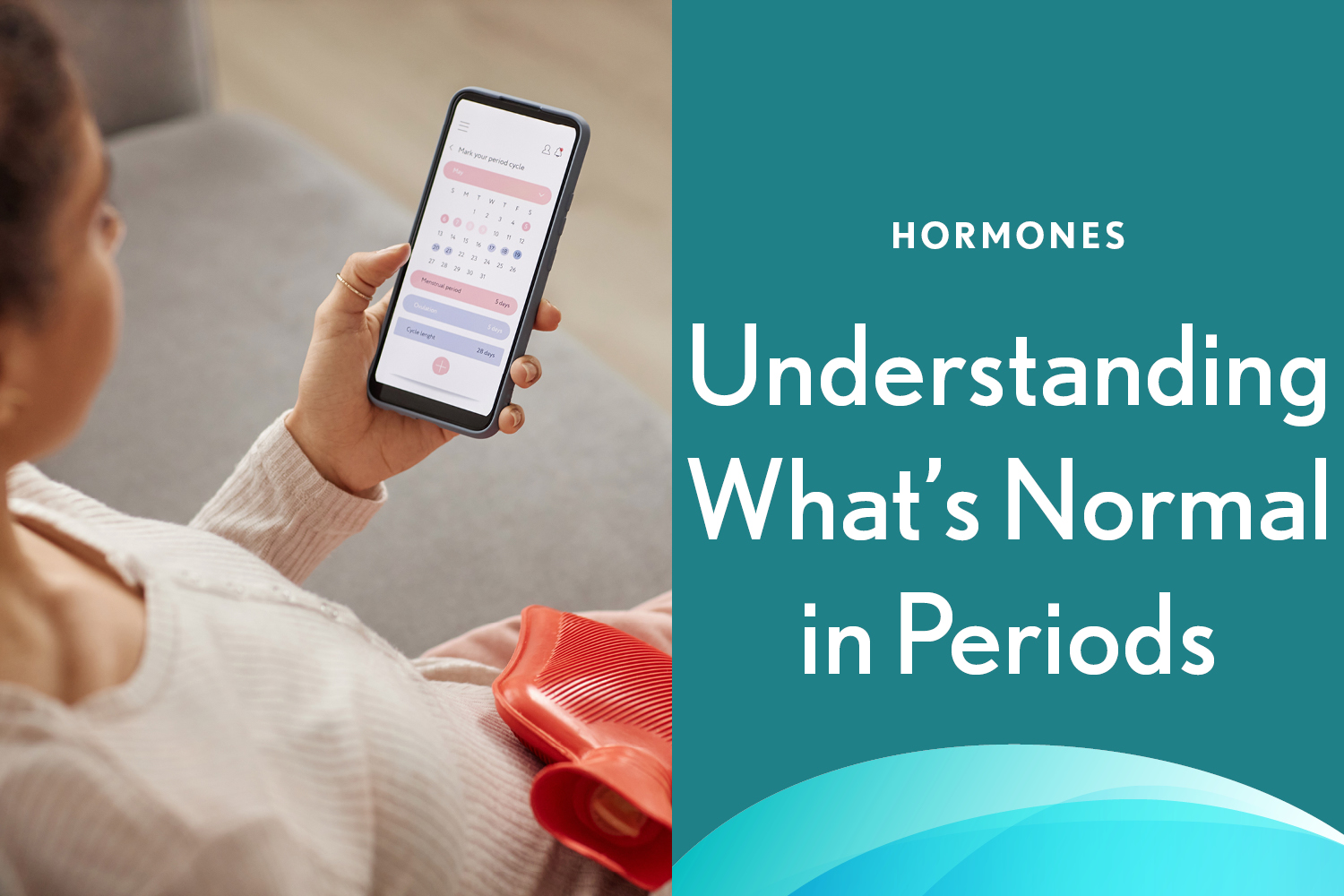
There are many great apps available, or you can simply use a notebook. Note the start and end date of your period, the heaviness of your flow, and any physical or emotional symptoms you experience.
Over time, you will start to see patterns. You might notice that your energy is highest around ovulation, or that you feel more introverted just before your period. This knowledge is power. It allows you to schedule your life in a way that works with your body, not against it.
By understanding and honouring your hormonal rhythm, you can take proactive steps to support your health at every age and every stage of life.
