

Deep inside almost every cell in your body lies an incredible story. This story is written in a language that connects you to every living thing on the planet. It is the story of your DNA, the biological instruction manual for life.
This manual is passed down through generations. It contains the wisdom of the past and the potential for the future. Understanding this genetic story gives us a profound insight into how we are built and how we adapt.
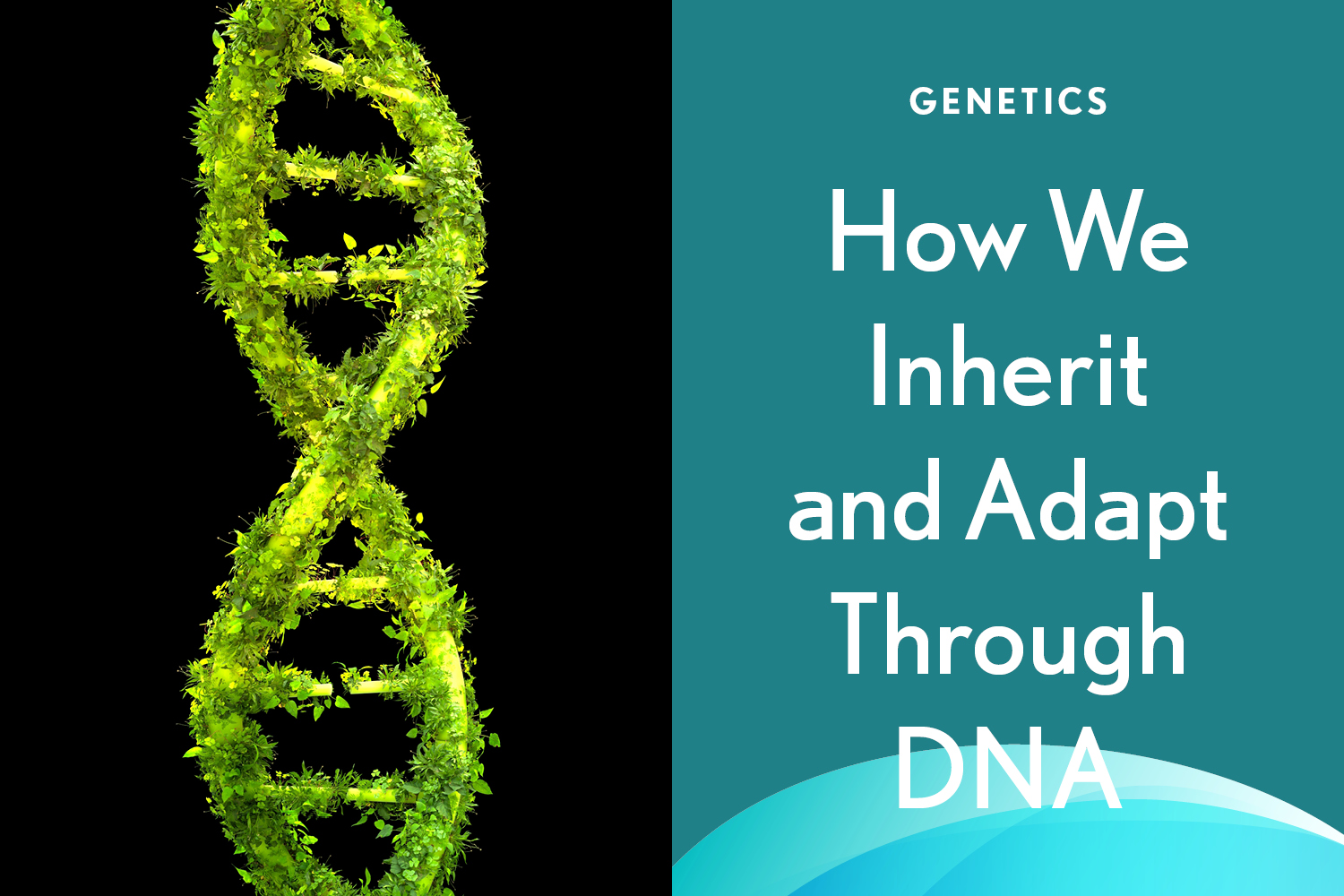
DNA, or deoxyribonucleic acid, is a long molecule shaped like a twisted ladder. The rungs of this ladder are made from four chemical bases. These are represented by the letters A, T, C, and G.
The specific sequence of these letters forms a code, or a genetic sentence, kind of like ‘the cat ate the rat’. This code contains the instructions for building and operating an entire organism. Remarkably, this same four-letter alphabet is used by nearly all life on Earth, from the smallest bacterium to the largest whale.
This shared code is a powerful reminder of our connection to the natural world. It is the fundamental language of biology. It links all living things in a single, vast family tree.
Your DNA contains tens of thousands of genes, segments of DNA that provide the instructions for building proteins and regulating biological processes. Think of it as a comprehensive instruction manual, where each gene is like a protein recipe.
Every cell in your body carries the same instruction manual but not all genes (recipes) are active in every cell. Some are ‘turned’ right down while others operate at full expression. This selective activation of genes is known as gene expression.
Gene expression essentially determines which recipes are followed, when, and to what extent. There are 2 types of gene expression:
This dynamic interaction between your genetic code and your environment helps shape how your body functions, adapts, and responds over time.
The story of DNA reveals some surprising connections. For instance, us humans share about 96% of our DNA with chimpanzees.
Fun fact: we also share a large amount of our genetic code with animals like mice and fruit flies!
This does not mean we are 96% chimpanzee. It means that much of the basic machinery of life is the same across species. The genes for fundamental tasks like cell respiration and metabolism are ancient and have been conserved across many species, particularly mammals.
These genetic similarities are a beautiful illustration of a shared evolutionary history. They show that all life is built from the same fundamental toolkit. The differences we see are often down to small changes in the code or how that code is used.
Now the process of copying DNA is incredibly accurate, but sometimes mistakes happen. A letter might be changed, deleted, or inserted. For example, ‘the cat ate the rat’ might become ‘the cat ate the mat’ (change), ‘hec ata tet hem at’ (deletion), or ‘thi eca tat eth ema t’ (insertion).
Modern convention has adopted the view that when these changes don’t result in health problems, they’re referred to as variants. The more negative ‘mutation’ is reserved for changes that do result in health problems.
Genetic variants are the raw material for evolution. They create the various characteristics, like hair and eye colour, that make an individual unique.
A random change in the DNA might also lead to a new trait that helps an organism survive better in its environment. Skin colour in humans is an example of this.
Without these occasional copying errors, life would not be able to adapt and diversify. They are a source of biological creativity and have driven the incredible variety of life we see on our planet.
Your DNA is both a historical document and a living script. It carries the legacy of your ancestors and responds to the world you live in today. It is a story of connection, adaptation, and immense potential.
Understanding this genetic story helps us appreciate the body’s complexity and resilience. It is a reminder that our health is a product of this incredible interaction between our inherited blueprint and our daily lives.
This knowledge empowers us to support the body’s innate ability to thrive.
